Four countries, two strangers, one contract
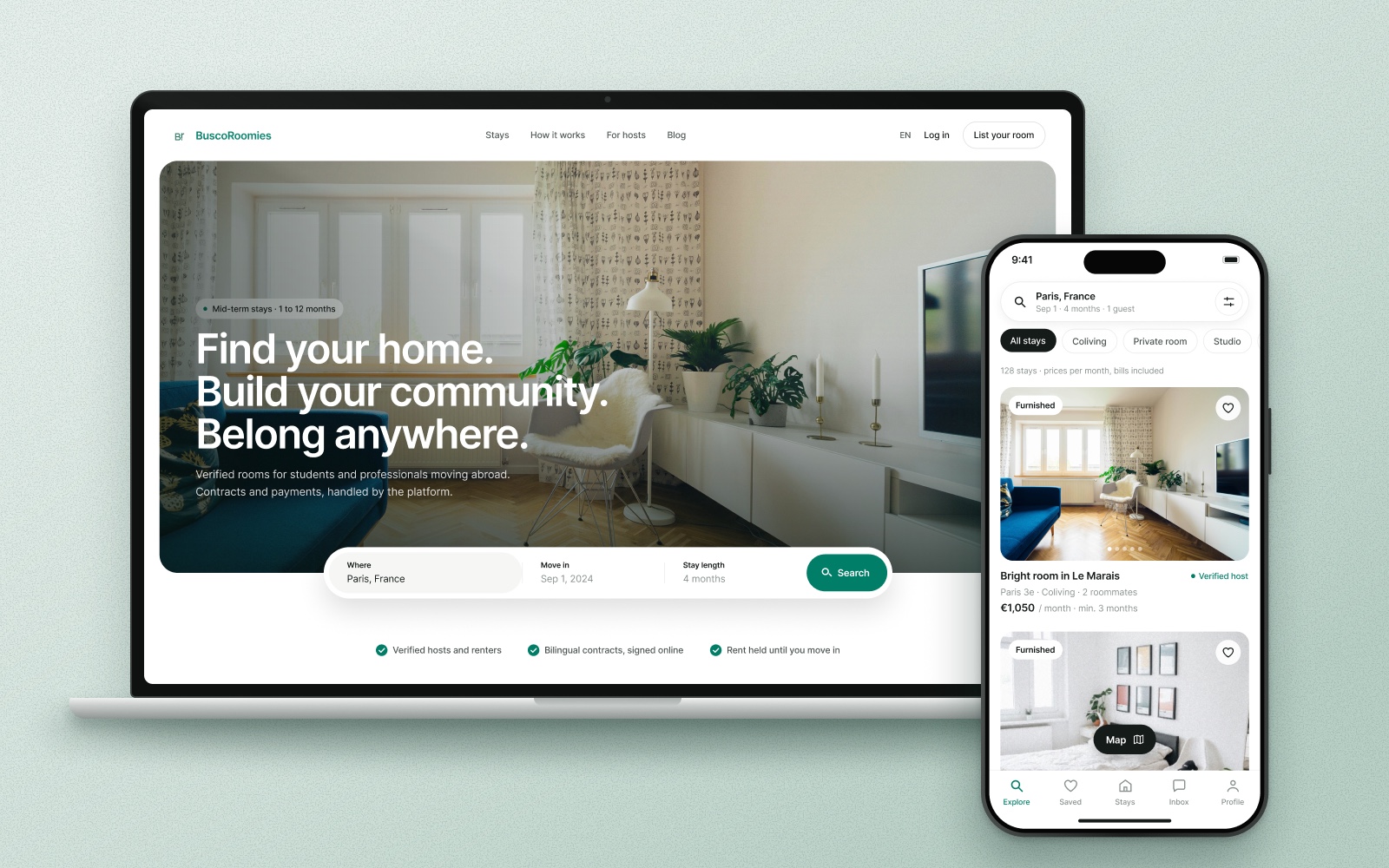
BuscoRoomies is a marketplace for mid-term rentals across borders. I designed both sides, the renter looking for a room abroad and the host renting it out, from nothing to a live MVP in Chile, Argentina, Colombia and France.
Screens are refined from the original files for this case study. The shipped product was built on Ant Design.
01 · The problem Both
Two strangers, one border, and nothing protecting either of them.
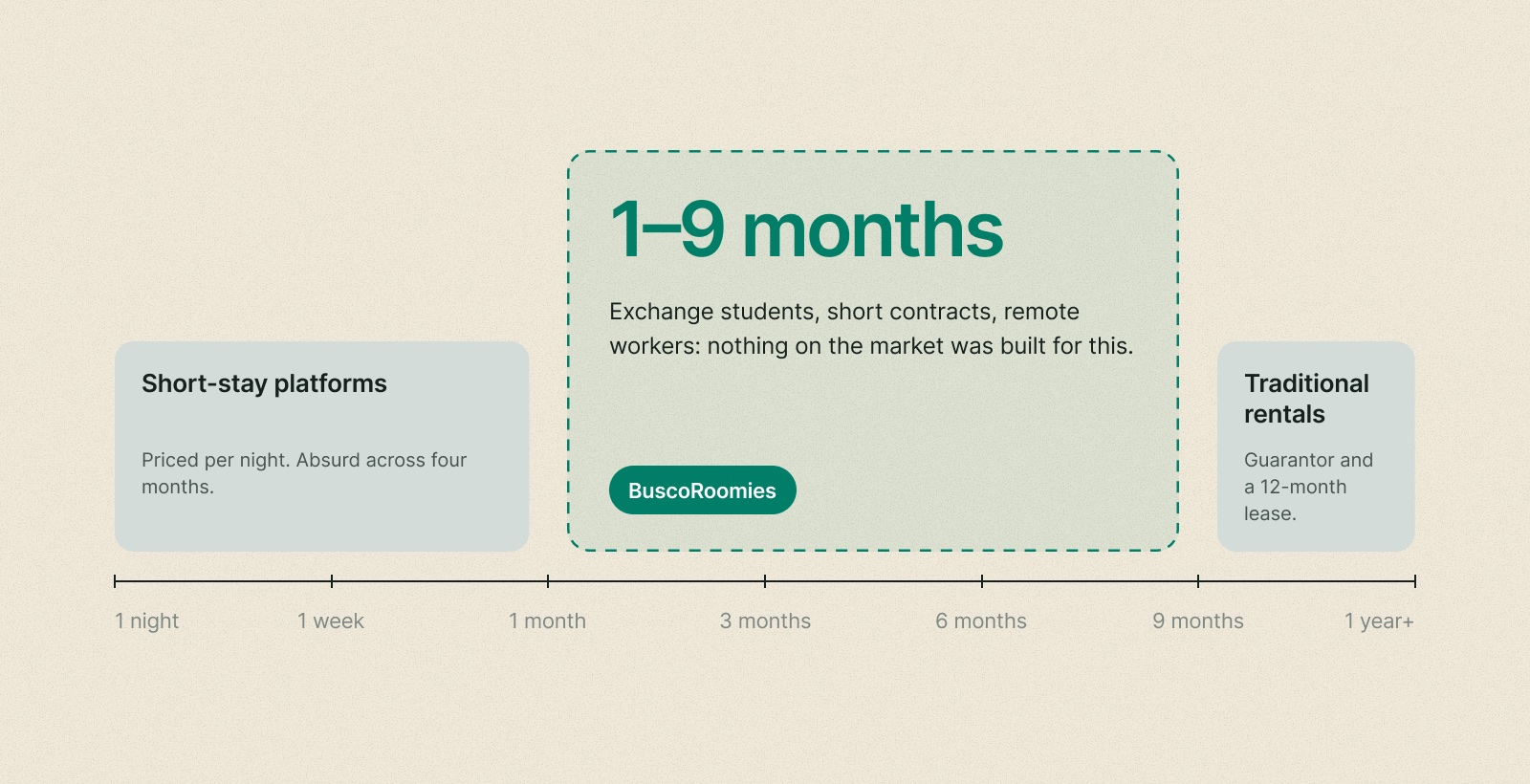
Someone moving abroad for four months has nowhere to go: short-stay platforms price per night and long-term rentals ask for a local guarantor and a twelve-month lease. So they end up in Facebook groups, sending money to a stranger.
The risk runs both ways. The renter can lose a deposit; the host can hand their keys to someone they can’t pursue across a border.
02 · The reframe Both
It was never a listings problem. Trust was the product.
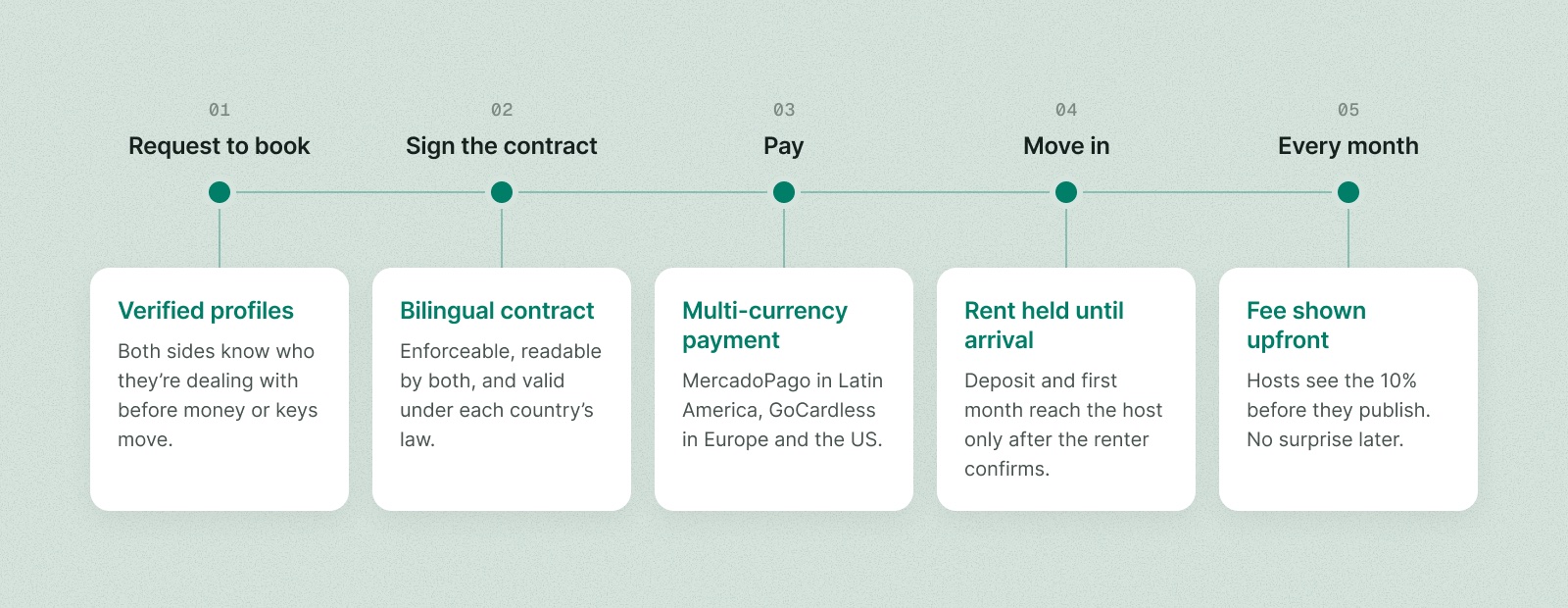
The brief I inherited described listings. Listings were the easy part. The hard part was the moment two strangers commit, so verification, contracts, held payments and visible fees stopped being five features and became one problem, approached five times.
03 · Search and book Renter
For the renter: search by how long you’ll stay, then pay without fear.
Search, filters, cards and the map behave like the platforms people already know: in a product about safety, novelty reads as risk. What changes is the unit: stays are searched by months, and every price is monthly with bills included.
Paying is where a renter’s fear peaks. The payment step shows exactly where the money goes: held by the platform, released to the host only after the renter arrives and confirms, with a full refund if the room isn’t as listed.
04 · Price and requests Host
For the host: a price you understand and renters you can trust.
BuscoRoomies took 10% of the rent from the host every month. A host who discovers that after publishing has been handled; one who sees it while choosing a price is making a decision. So the fee lives inside the listing flow, next to a live preview of what renters will see.
Once listed, the dashboard is built around the decisions a host actually makes: who to accept, when someone moves in, when money arrives.
05 · The contract Both
Where both sides meet: one contract, in both their languages.
No consumer product had a pattern for this, so this is where most of the design work went. The contract shows French and Spanish side by side, highlights the terms that matter (dates, rent, deposit) and shows who has signed. France and Argentina don’t agree on what a lease is; the product had to be correct in both.
06 · Constraints Host
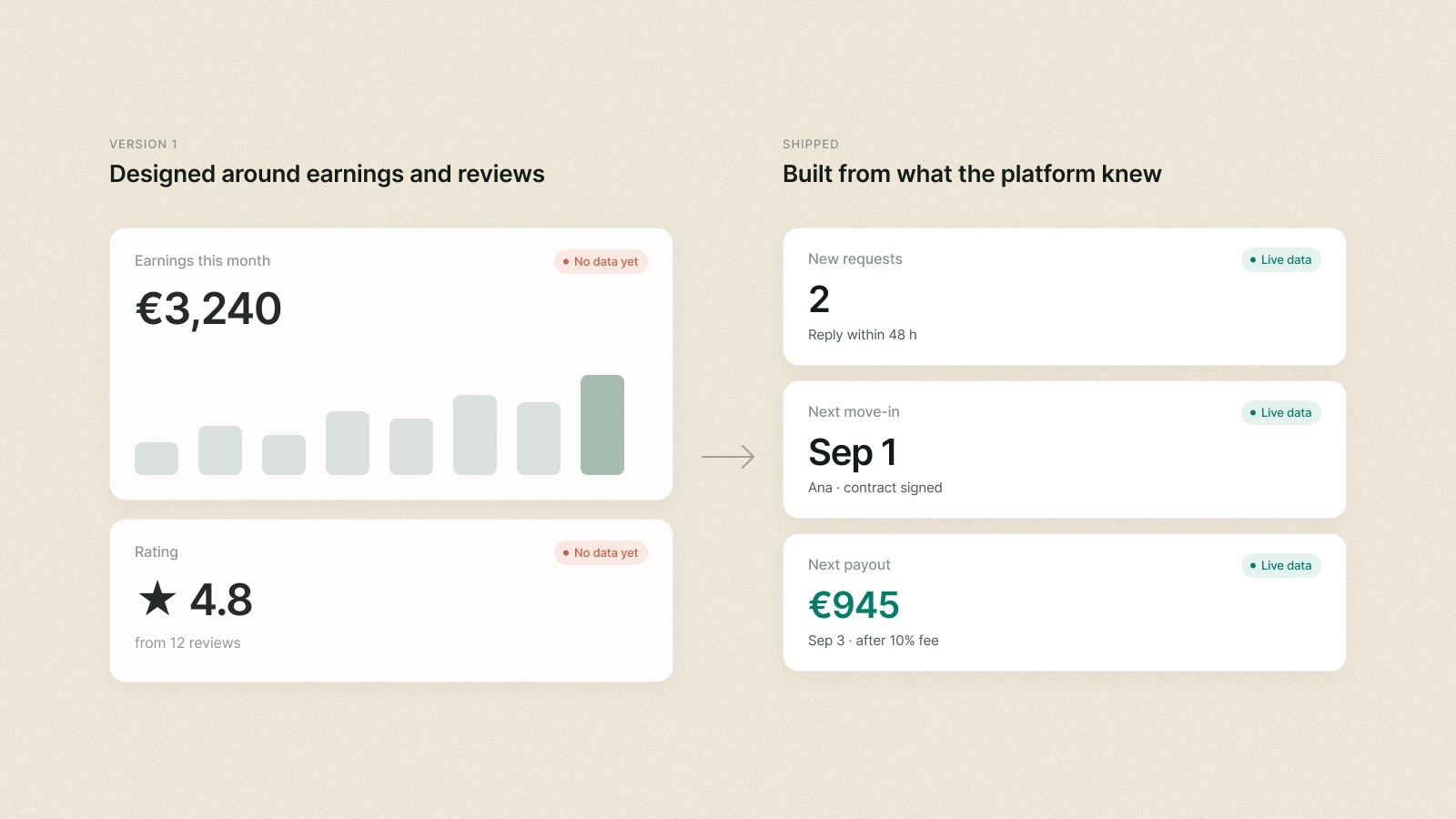
My first host dashboard was built on data that didn’t exist yet.
I joined as the only person on the tech team. When a CTO and developers arrived, I went from deciding to negotiating. The first dashboard led with earnings and ratings. Neither existed as data. I rebuilt it around what the platform did know.
07 · Outcome
Live in four countries, with no metrics to show.
Both sides worked end to end: renters searched, booked and paid; hosts listed, accepted and got paid; contracts were signed on the platform. The first users arrived days before I left and I had no analytics, so I won’t estimate numbers I don’t have.
- 4
- Countries live
- 2
- Sides designed
- 2
- Languages in one contract
08 · Reflection
Designing on inference is not designing on evidence.
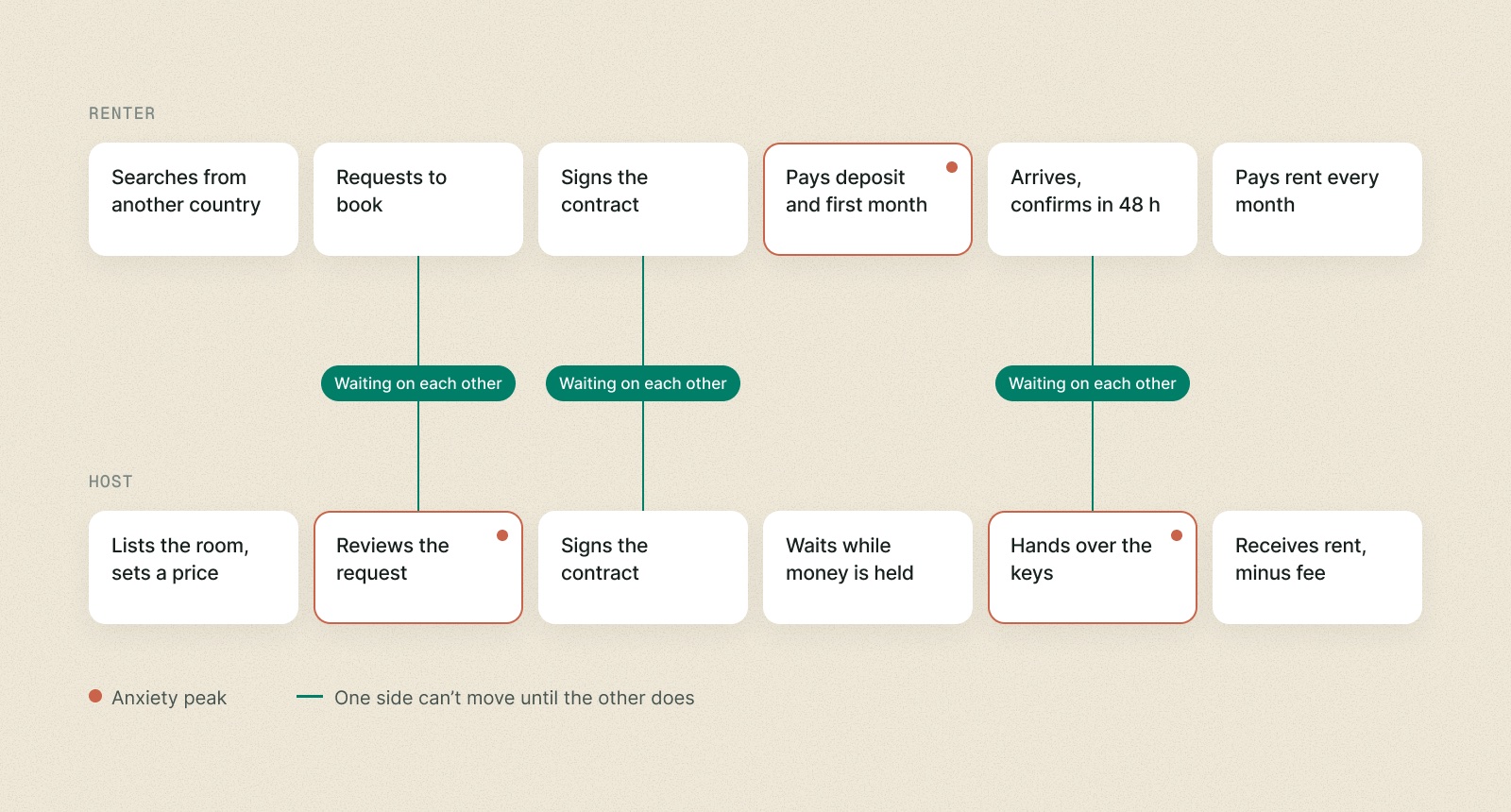
The research was handed to me. I worked from the founder’s experience, five colleagues testing the flows, and two journeys I mapped myself, the one place I could see where each side was waiting on the other. Now I push to meet real users much earlier than feels comfortable.